
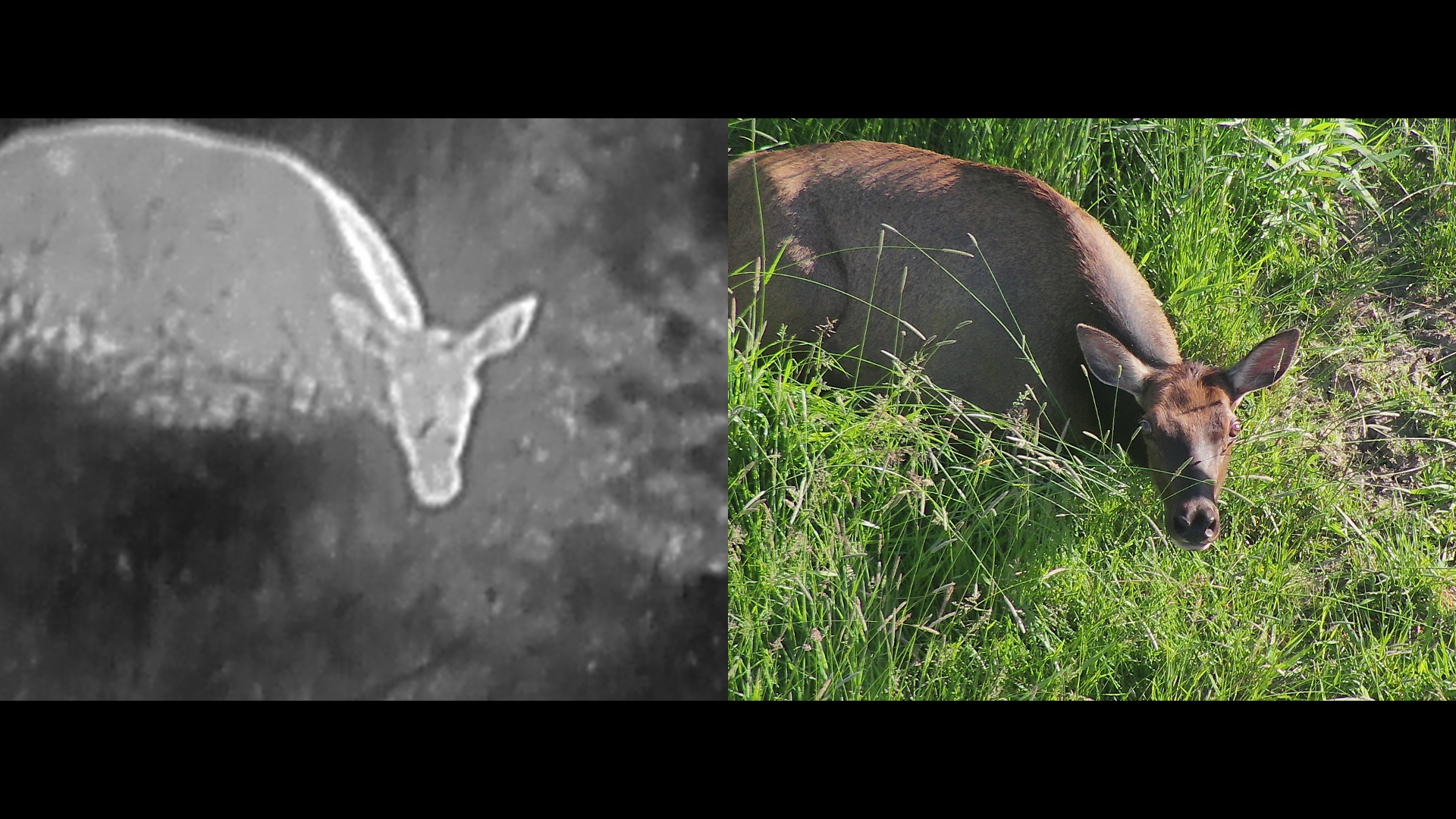
The Stillaguamish Tribe of Indians used a drone equipped with a high-resolution thermal imaging camera to identify and protect elk calves from mowing activities on a Whatcom County property this summer.
Newborn elk calves nestled in tall grass have been killed during mowing in the past. Eager to avoid harming wildlife, the Washington Department of Fish and Wildlife (WDFW), Whatcom County and local residents reached out to the tribe to assist using their thermal-imaging drone.
“Elk calves are fairly immobile in the first few weeks of their life and rely on cover to hide from predators,” said Amanda Summers, wildlife biologist for the tribe.
“We’ve used the drone to find mallards and other ducks that are nesting, and identify and track their broods over time,” said Jennifer Sevigny, wildlife program manager with the tribe. “We’re always looking for different ways to use this drone technology.”
Stillaguamish natural resources technician Derek Arterburn piloted the drone, using the thermal imaging to locate three elk calves and several adults in the county’s tall-grassed field. A neighboring landowner provided bamboo sticks with flagging to mark the calf locations.
“Knowing the potential impact farmers may have on elk calves and deer fawns is something we didn’t give a lot of thought to. But when you talk to farmers, they say it does happen,” Sevigny said. “We want people to know fawning and calving occurs during late spring and early summer. Maybe mowing could be scheduled earlier or later to avoid prime calving and fawning seasons.”
“The North Cascades elk herd population is experiencing a downward trend so addressing additional causes of mortality is important to the Tribe” said Gary Tatro, Stillaguamish natural resource policy representative and tribal board member.
There have been conversations about similar efforts on other Whatcom County properties for 2027, Sevigny said.
The tribe also plans to use the drone for an elk calf survivorship study with WDFW and other tribes next summer. The drone will be used to find elk calves, which will then be outfitted with expandable, breakaway collars that will provide GPS location data and mortality alerts so staff can understand movement, survival and cause of death.
An elk photographed by Stillaguamish Tribe of Indians staff via thermal imaging (left) and standard camera (right). Photo provided by the Stillaguamish Tribe of Indians. Story: Trevor Pyle


