
Quinault Indian Nation staff strapped on mud boots and strode into the tideflats near Ocean Shores late this summer to survey invasive European green crab.
The tribe has partnered with Washington Sea Grant to see whether the growing numbers of the voracious green crab are affecting native Dungeness crab.
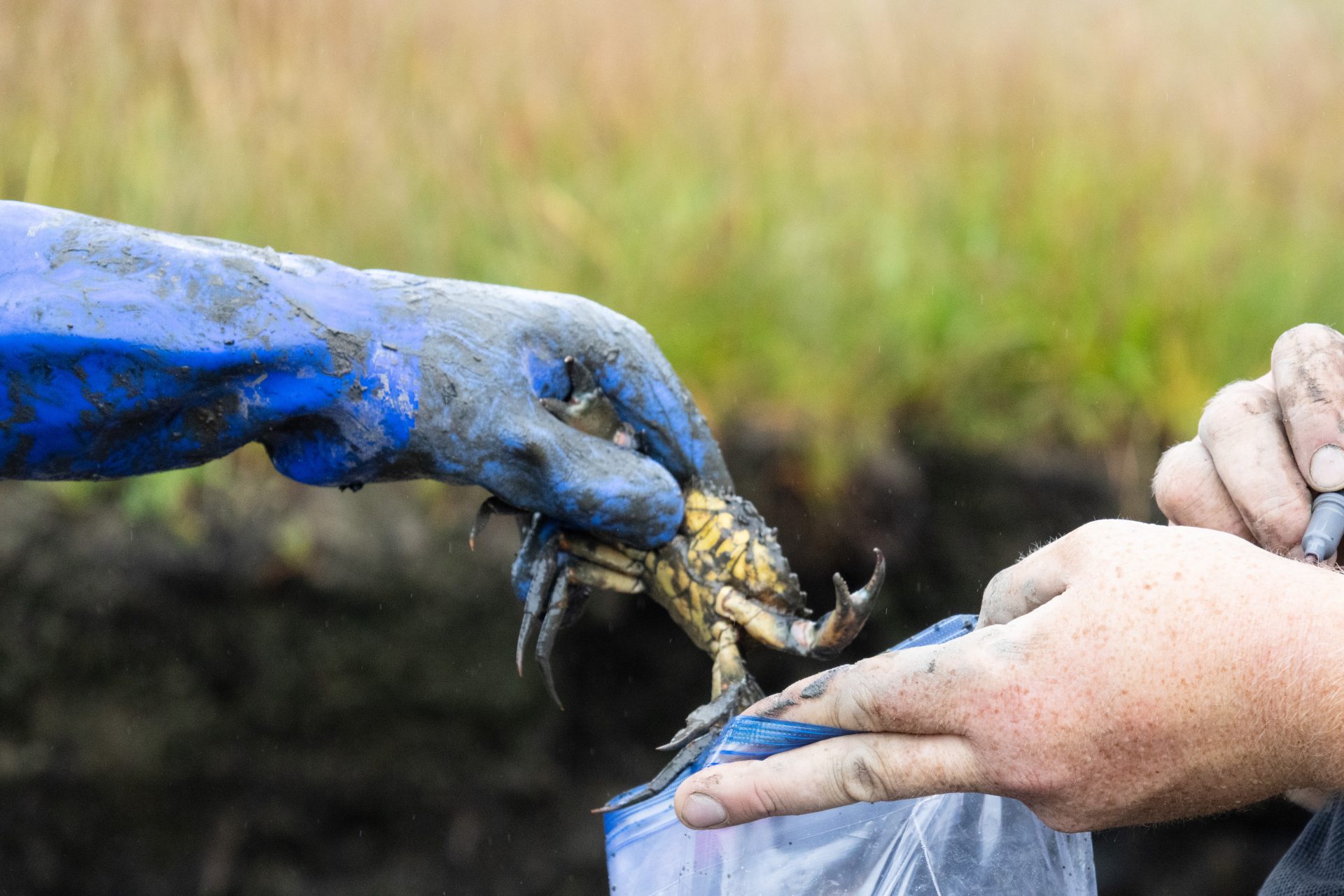
After setting out several types of traps overnight, tribal staffers pulled the traps the next morning and recorded their elevation and data about the crab they caught: species, sex, size and whether they carried eggs.
With the same data recorded over time, the tribe and partners will learn more about the ratio of green crab to Dungeness, and which direction that trend is headed in.
“This is getting baseline data,” said Scott Mazzone, the tribe’s shellfish and marine fish biologist.
“We want to find out what’s normal. If we keep trapping every year, we might see an increase in green and decrease in Dungeness or vice versa.”
Invasive European green crab can destroy critical eelgrass, estuary and marsh habitats and prey on other shellfish. Their impacts on Dungeness crab need to be studied, given the importance of the native crab in Washington state and to tribal treaty rights and commerce, Mazzone said.
Many years of data will need to be gathered and analyzed to establish a correlation between the populations, and determine whether one has a direct effect on the other.
If green crab harmed the Dungeness crab fishery, Mazzone said, “it would mean heartache for communities up and down the West Coast.”
A staffer with the Quinault Indian Nation hands over a European green crab to be bagged as part of a study. Photo: Trevor Pyle


