
Cockle seed for the Suquamish Tribe’s shellfish program spent a bougie spring in a cozy hatchery environment—with proper water temperature, regular feedings, no predators—before being thrown into the wild and learning to survive on their own.
“We like to call them naive, and they’re learning the harsh realities of life,” said Ryan Crim, conservation hatchery manager for the Puget Sound Restoration Fund (PSRF) who oversaw the growth operation at its Manchester facility.
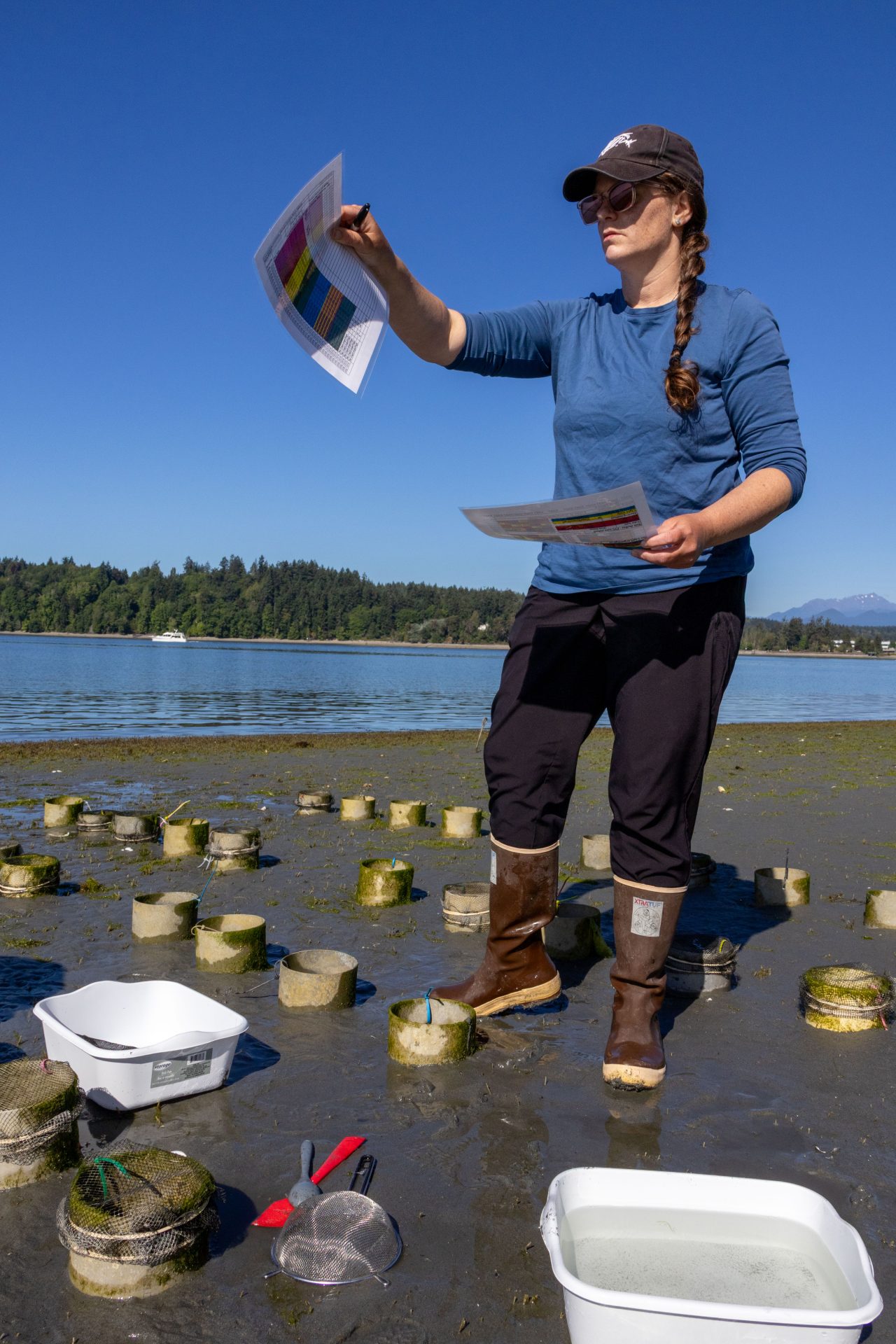
But the cockle seeds weren’t completely left to Mother Nature’s trials and tribulations. The seeds were tucked into geoduck tubes on a beach near Suquamish, the latest effort by the tribe to develop a cockle subsistence program for tribal members.
The traditional food has been hard to find on local beaches the past few decades, according to the elders who used to harvest them regularly.
But cockles have been showing up on their own in geoduck tubes on shellfish farms throughout Puget Sound, said Elizabeth Unsell, a Suquamish Tribe shellfish biologist. The tribe wanted to see if using geoduck tubes could help develop out-planting techniques.
Starting with broodstock from a wild population in Sequim Bay, the cockles were spawned at PSRF’s conservation hatchery in April.
“We know they do really well in Sequim Bay, and they’re the same genetic stock as the cockles in Suquamish, so there’s no issue with moving the individuals around,” Crim said.
The tribe set out 150 geoduck tubes (some PVC, some mesh) on the beach in May. In June, they filled each tube with either 30 or 60 cockles, either all small or all large in size, and topped with a mesh net cap or left open. A group of control tubes were set up that didn’t have cockles but had mesh caps or no mesh caps.
The first monitoring in July showed visible growth and strong survival among some plot types, Unsell said.
“It makes sense because there was lots of food in the water, so it was a pretty happy time for them to be planted,” Unsell said. “The algae and other plankton were like soup out there.”
The tribe also is learning how to outplant cockles to maximize the genetic diversity.
When spawning at the hatchery and after seed was produced, PSRF took samples to compare the genetic diversity of the offspring of different family sizes, and to compare them to wild populations found in the Salish Sea.
“We’re really hoping with this data we’ll be able to develop a hatchery protocol that produces genetically diverse seed that could be used to enhance wild populations without conferring any genetic risks,” Crim said.
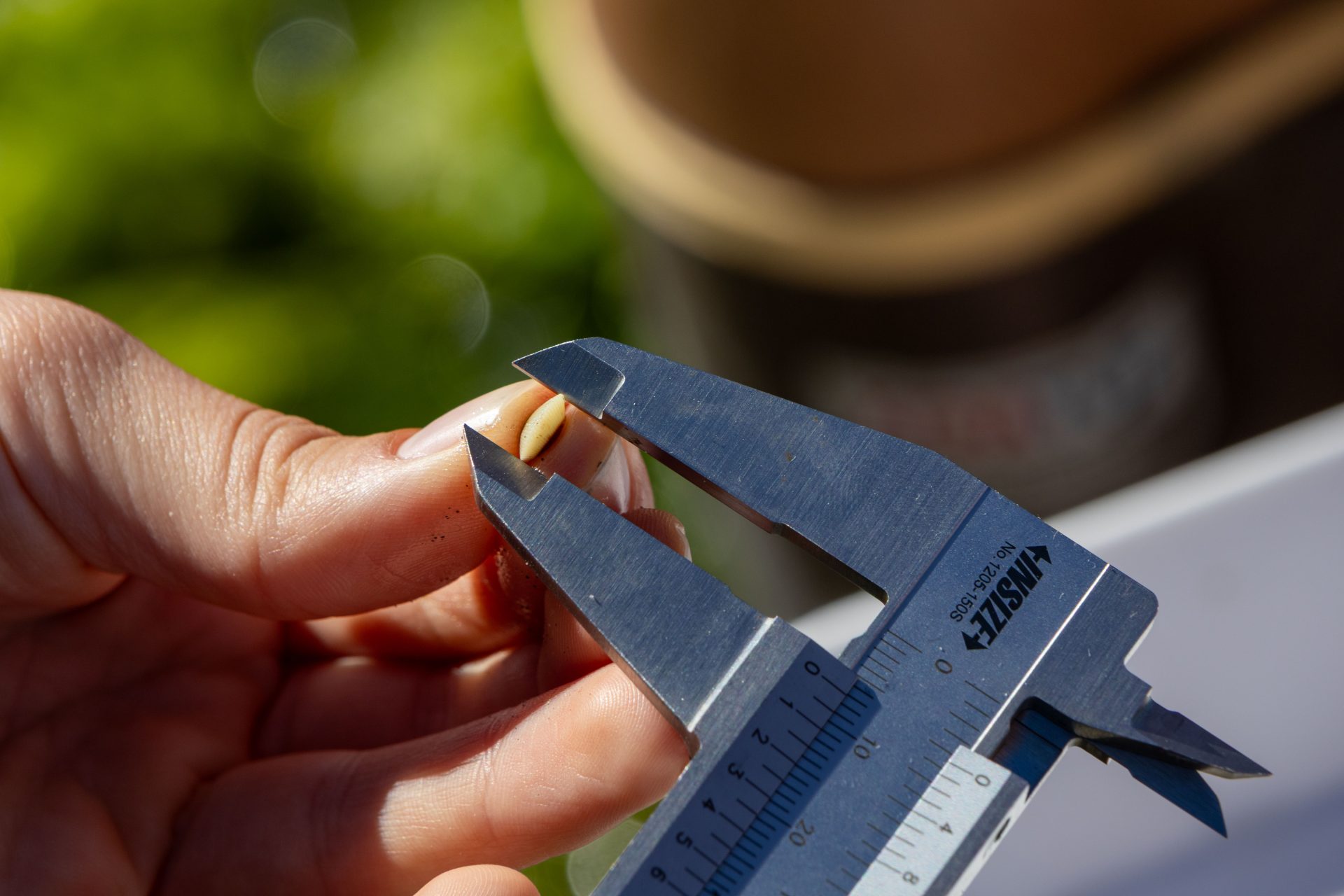
A cockle seed is measured for growth during the geoduck tube outplanting project. Story and photos: Tiffany Royal