

The Tulalip Tribes and partners secured funding to continue monitoring juvenile salmon marine survival through 2027, but the future of the critical research is uncertain.
For the past six summers, Tulalip tribal staff have participated in the ongoing study of juvenile salmon’s marine health—an indicator of the salmon’s chances of surviving years in the ocean and returning home to spawn.
“This is a tape measure to see how much the fish grew before they go to deeper water,” said Mike Crewson, fisheries enhancement biologist for the Tulalip Tribes. “It’s been shown in past studies to be highly predictive of marine survival.”
The Bureau of Indian Affairs provided funding for the initial five years of this program but discontinued their funding in early 2025. The Tulalip Tribes and its partner Long Live the Kings managed to secure funding from the Salmon Recovering Funding Board to continue surveys for this year and 2027 but future funding is uncertain.
If the research doesn’t secure ongoing funding, valuable long-term data needed to understand salmon survival under a changing climate will be at risk.
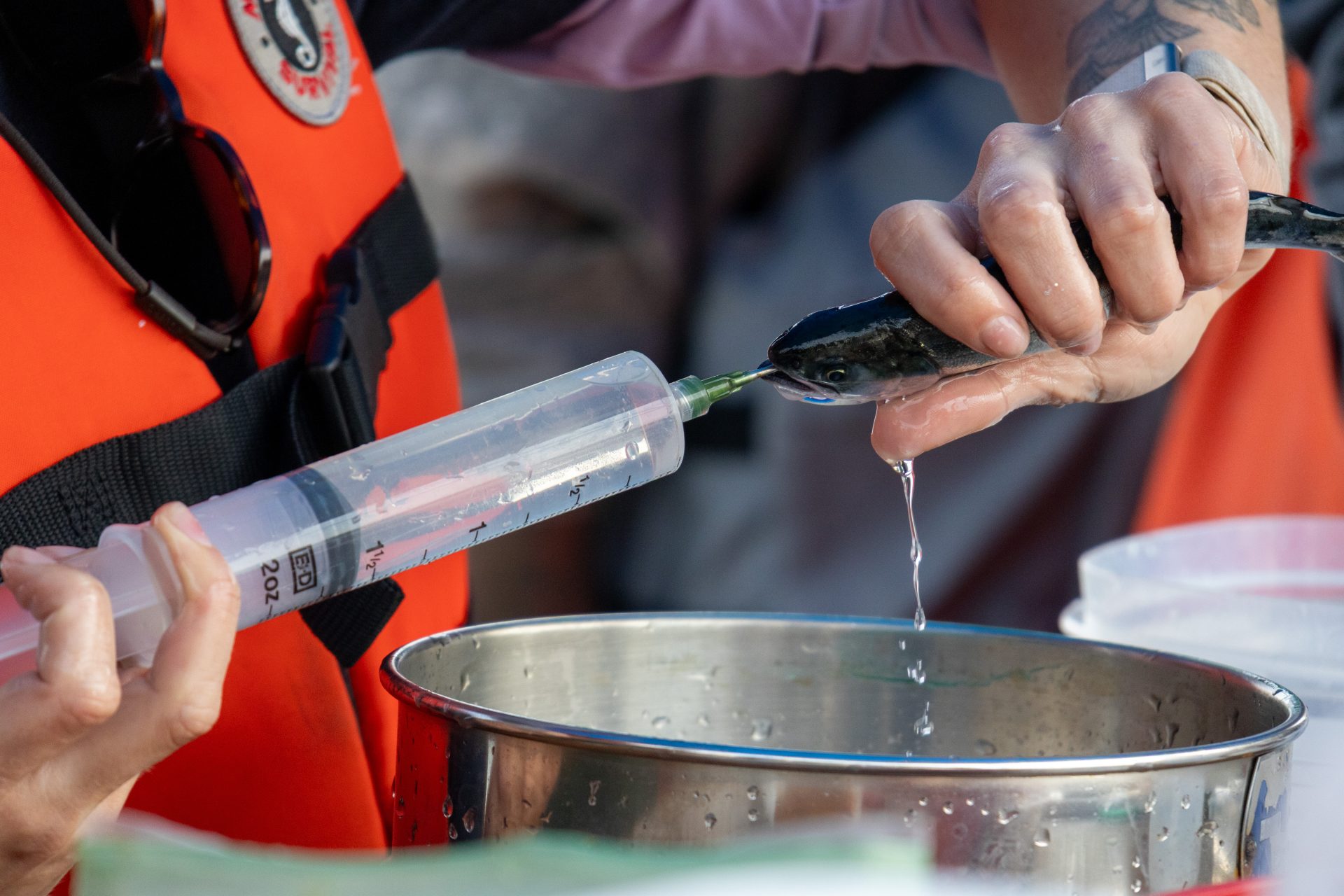
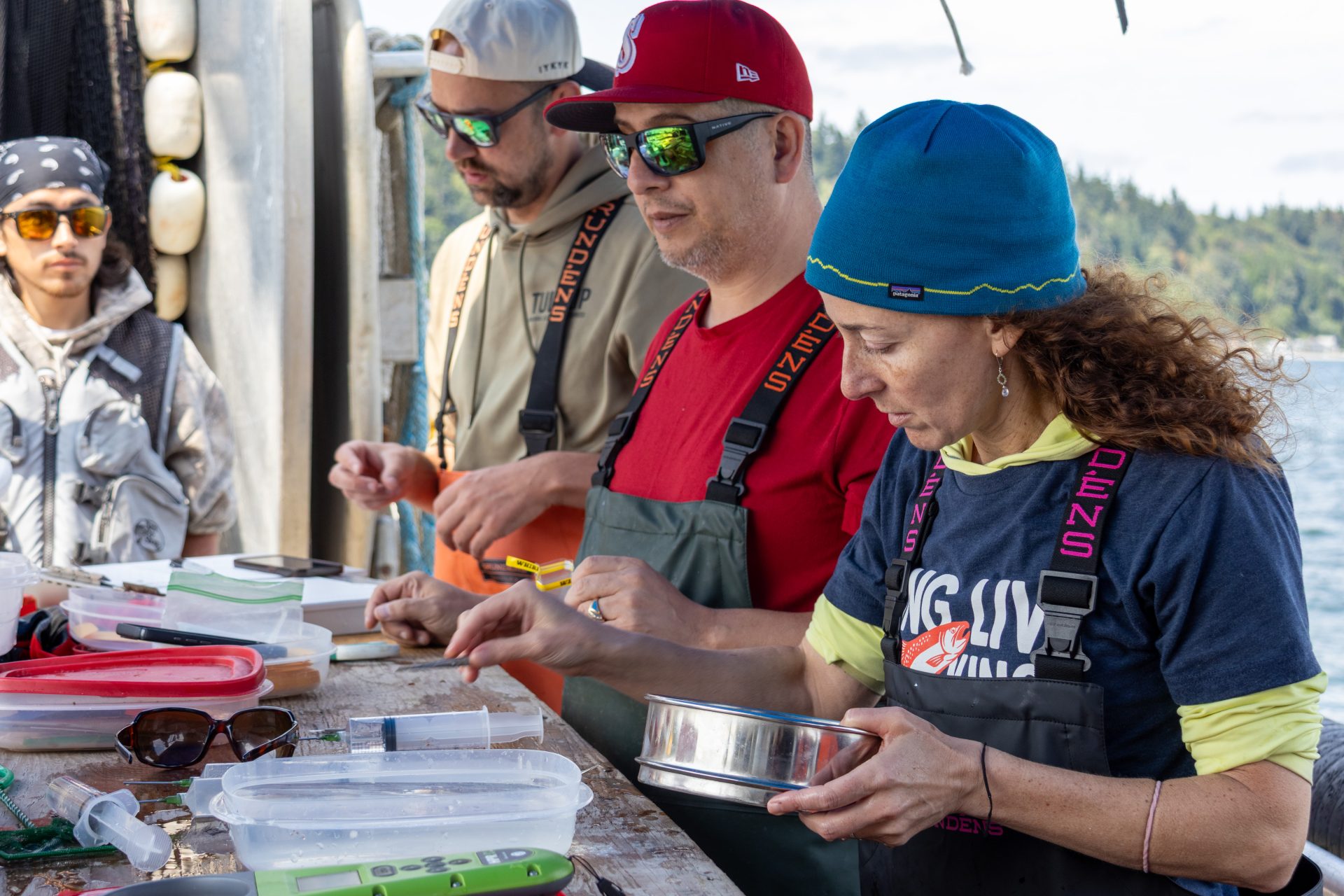
Researchers in this annual offshore monitoring program collect juvenile salmon using a purse seine, sampling their diet, length and weight. They also collect scales to analyze growth rates and DNA from wild fish and coded wire tags from hatchery fish to see what stocks they originated from. In addition, zooplankton samples are collected at each site along with recording other environmental conditions that could also help or hinder their growth and survival.
Samples from the fish collected throughout the sound are also available to the Washington Department of Fish and Wildlife (WDFW), to help determine areas where fish may be exposed to high concentrations of toxic contaminants.
As in previous years, this year’s foray sampled the marine waters extending from Bellingham Bay to the San Juan Islands and throughout Puget Sound including the northern end of Hood Canal.
The study also surveys the abundance of forage fish such as herring, which serve as a key food source for salmon.
“We view this as an annual diagnostic—a fish checkup,” said Elisabeth Duffy, associate director of science with Long Live the Kings. The Offshore Marine Juvenile Salmon and Herring Project, and its companion Puget Sound Zooplankton Monitoring Program, were determined as top priority annual monitoring projects under the Salish Sea Marine Survival Project both projects were recommended to continue as the consensus of more than 200 scientists from 60 partner organizations that participated in the Project from the U.S. and Canada.
“This is one of the tools we need to plan for the future. It’s critical,” Crewson said.
The ongoing study has given the tribes and partners crucial data, especially as climate change’s foothold grows.
“It’s an essential tool not just to forecast abundance but to identify the main limiting factors affecting salmon survival,” Crewson said. “It’s a responsibility we all have to our constituents.”
The Tulalip Tribes, together with other tribes and partner organizations, are committed to keeping the program alive, and this year’s sampling effort was no exception. With less than two months warning before the start date, the boat had to be replaced and a new boat acquired and fully equipped.
That was accomplished thanks to the extraordinary efforts of the Canadian captain and veteran crew of four, who collectively have more than 250 years of experience. A delay at the onset of the project required the entire crew of eight to reschedule the entire cruise and add an additional week. Despite all of these obstacles, a record 21 sites were sampled this year including two new sites.
“We’re going to persevere and make it through these obstacles,” Crewson said. “Losing our salmon is bad enough, but not even being able to explain how or why is incomprehensible to us, so we remain optimistic that the agencies will come together to maintain these vital programs,” Crewson said.
A juvenile salmon is lavaged so scientists can study its diet. Photos: Trevor Pyle


