Despite ongoing efforts to provide cold-water shelter at Lummi Nation’s Skookum Creek Fish Hatchery and to rebuild habitat throughout the Nooksack River watershed, many chinook are dying in the South Fork Nooksack River before they can reach the hatchery or spawn in the river.
Chinook began arriving in the South Fork a few weeks earlier than usual this year, and soon after began succumbing to deadly conditions in the water.
High water temperature is a known factor that has been contributing to pre-spawn mortalities since 2021. Lummi Nation and the Northwest Indian Fisheries Commission (NWIFC) investigated in August and found a parasite, Dermocystidium, to also be contributing to the pre-spawn mortalities this year.
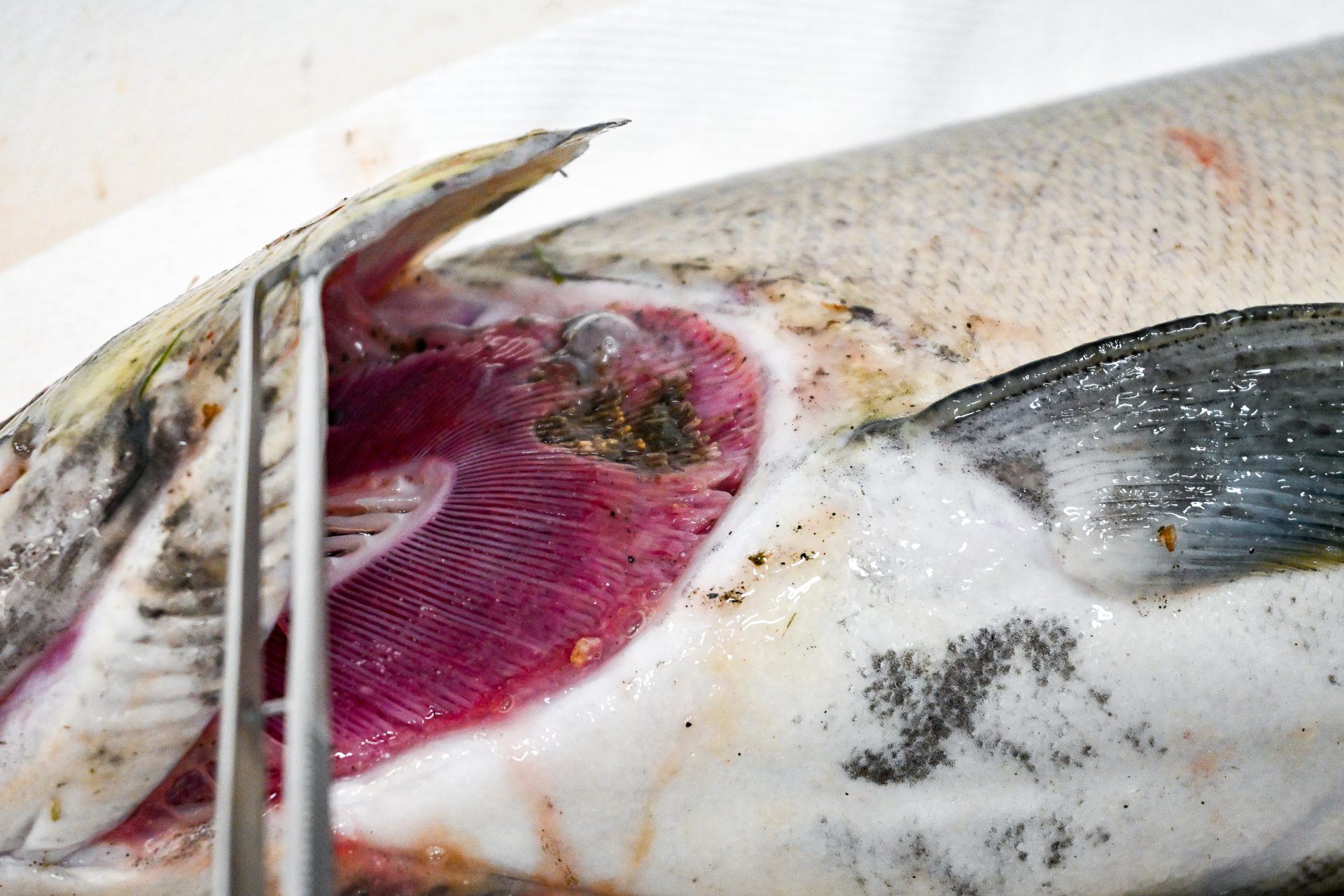
“As flows decrease and water temperatures go up, fish crowd in pools and there’s a suite of pathogens we tend to see,”said Marcia House, NWIFC fish health program manager.
Fish health staff gathered skin, gill, heart, kidney, spleen and intestine samples from a subset of 20 pre-spawn mortalities in August. The samples were analyzed for the presence of a variety of pathogens.
While columnaris disease, a bacterial infection, has been a clear contributor in past die-offs—with a yellow and brown rotting appearance at the gills and on the tails of infected fish—this is the first time the gill parasite Dermocystidium has been found in the watershed.
“At this time, it is not clear what factors have contributed to the new detection and we will continue to monitor the population,” House said. “We do know that increasing water temperatures can accelerate the progression of disease processes.”
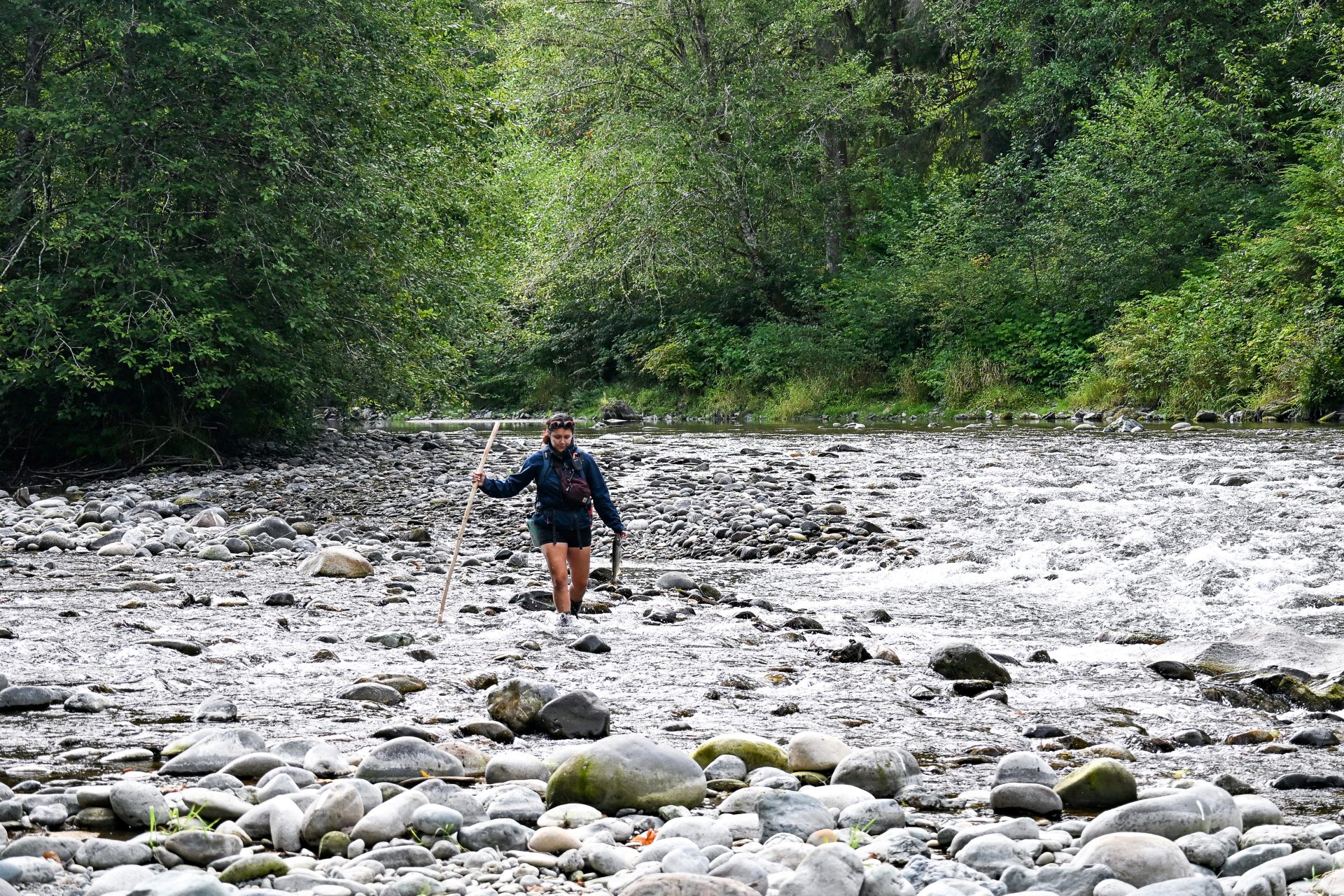
Data from a nearby U.S. Geological Survey gage has shown high water temperatures in the South Fork through the summer. The water temperature tends to climb as streamflow recedes due to a lack of rainfall, leaving shallow water exposed to the sun.
“This is supposed to be a river,” said Zoë Lewis, deputy stock assessment manager for the tribe, of the largely walkable gravel riverbed during a site survey. “Temperature is definitely a big factor, and when the river is low, it’s just getting hotter and hotter.”
Lummi Natural Resources staff survey the South Fork Nooksack River daily for spawning data while chinook are present, usually mid-August through mid-October.
Coded wire tags, otoliths and tissue samples are collected for genetic analysis. This information is used to identify the origin of spawned-out fish and to estimate escapement—the number of fish that returned and successfully spawned—for those stocks.
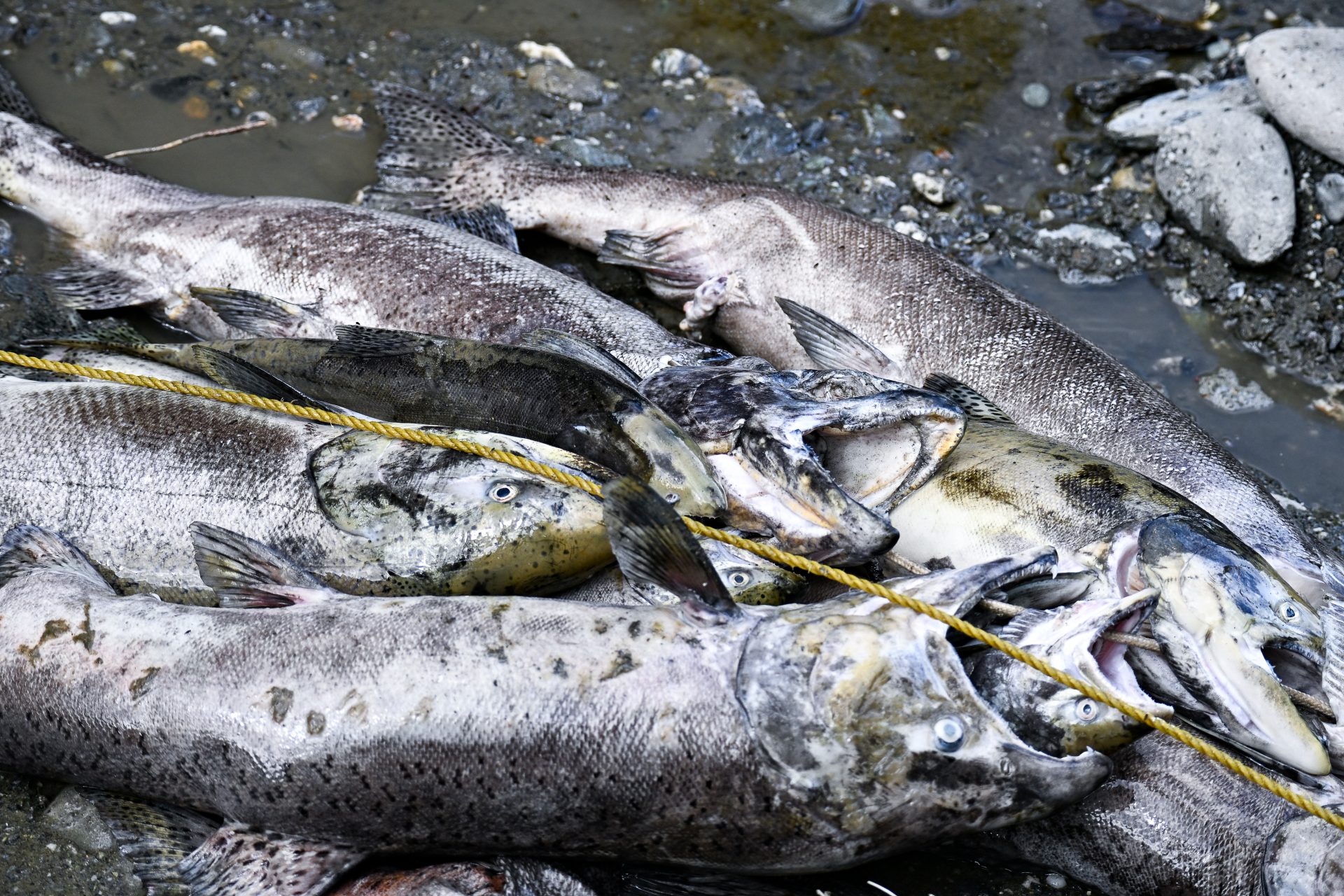
Because pre-spawn mortalities don’t count toward escapement, information from those fish is gathered separately. And when numbers become daunting during die-off events, data is collected for just one of every 10 of those fish.
The early arrival of fish this year prompted surveys to begin the first week of August. By the end of the month, more than 500 pre-spawn mortalities had been documented so far.
“The fish arrived in the South Fork about three weeks earlier than usual, and the die-off is about two weeks earlier than we’ve ever seen,” Lewis said.
Dead fish are removed from the river to reduce the concentration of bacteria and parasite exposure for remaining fish.
The rate at which die-offs are occurring, and the trend now six years long, is alarming for the population of chinook that Lummi Nation has worked in the hatchery and in the river to protect.
“Despite ongoing hatchery rebuilding and habitat restoration work, continued habitat degradation—both current and legacy—remains a significant barrier to recovery,” said Devin Flawd, stock assessment manager for the tribe.
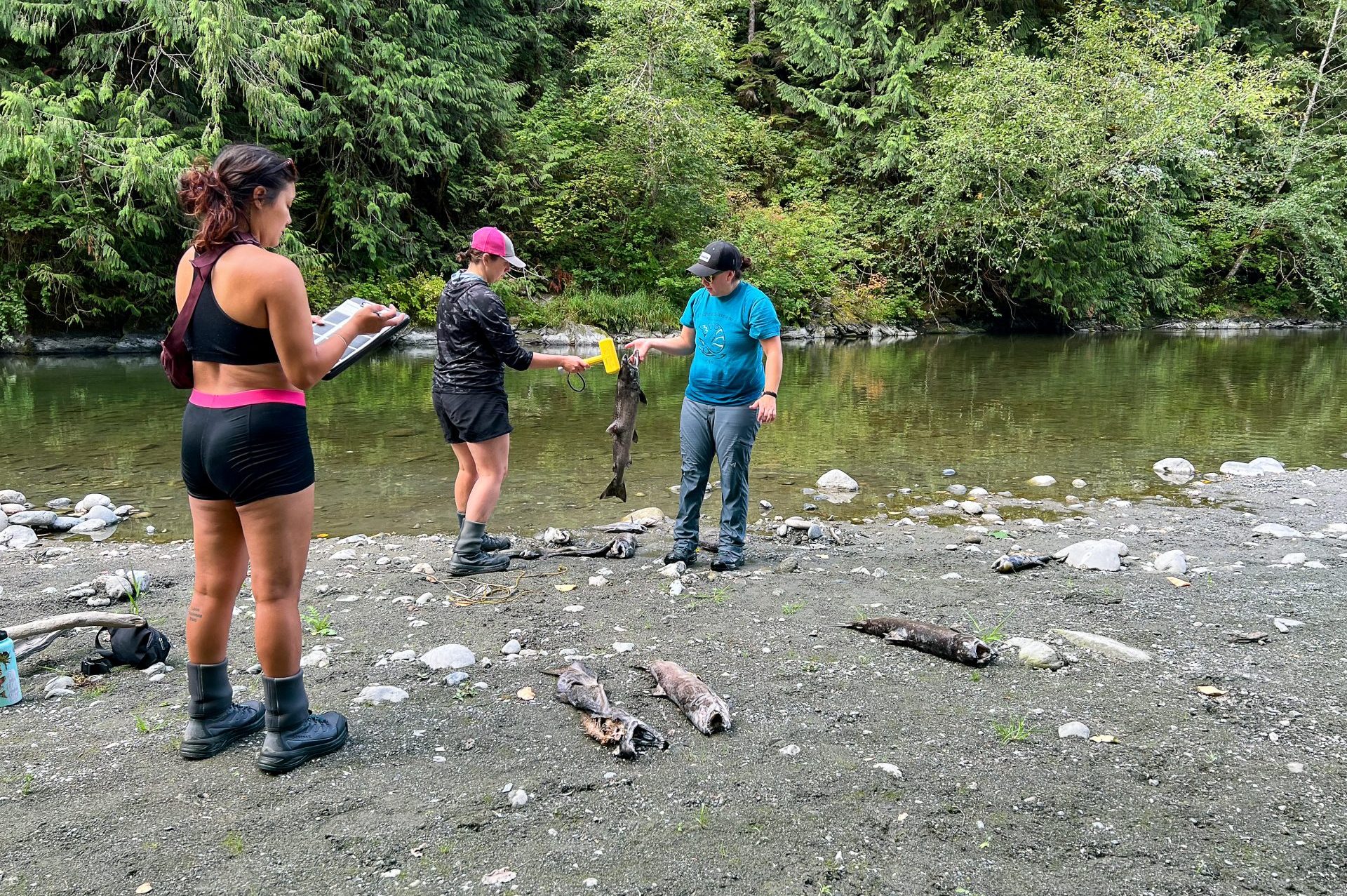
Above: Zoë Lewis, deputy stock assessment manager for Lummi Natural Resources, center, scans a fish held by salmon enhancement biologist Taylor Solomon for a hatchery tag while research intern Kasia Adams takes notes. Photos and story by Kimberly Cauvel